
The First Signs of Change
Nothing Stays Quite the Same
There is a moment towards the end of winter when something begins to feel different.
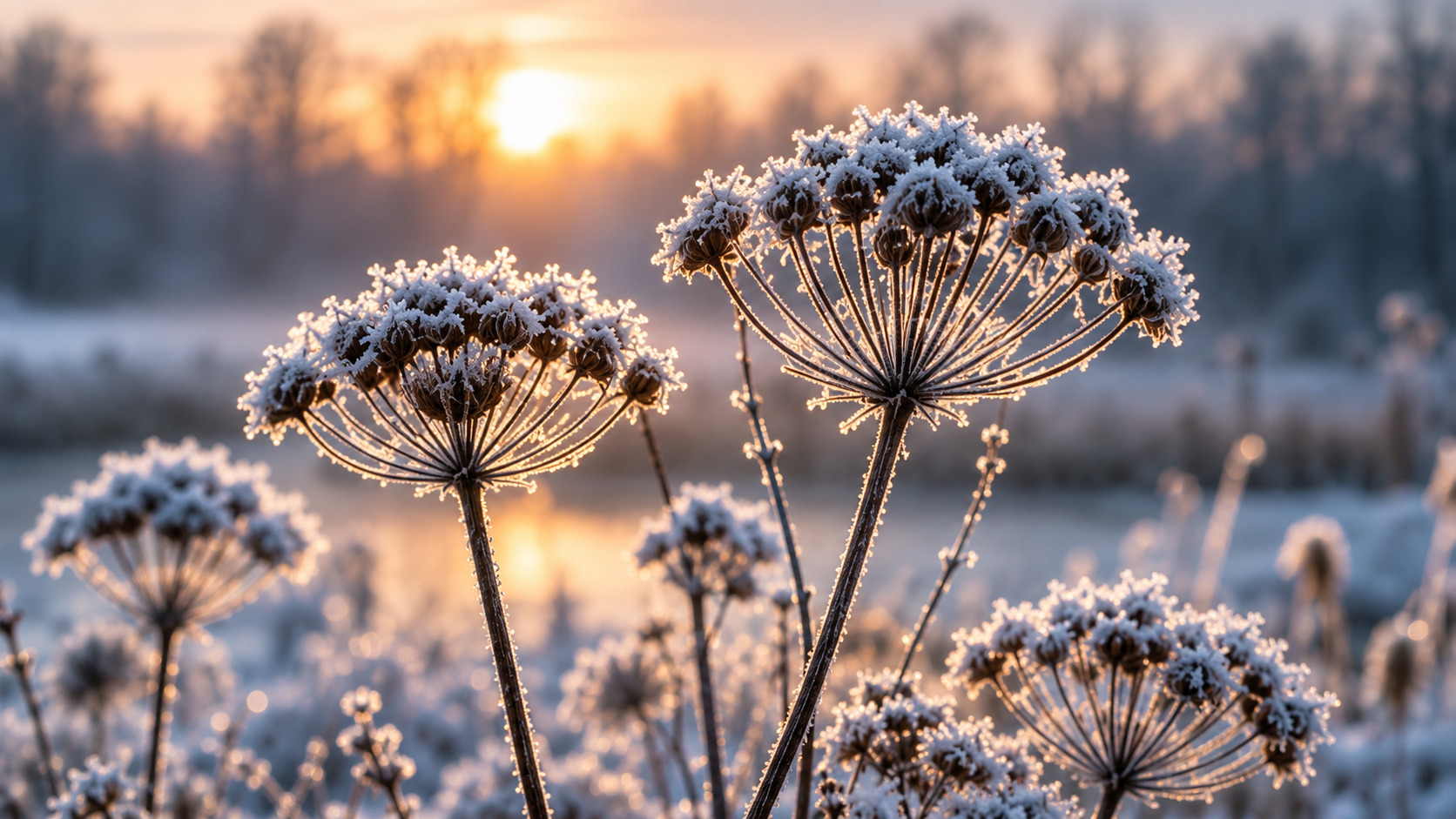
The trees may still be bare. The ground may still be cold. The landscape appears much as it did a few weeks earlier. Yet something has begun to change.
Perhaps it is the quality of the light, a bird singing a little earlier in the morning, or a subtle swelling of the buds on a familiar tree.
These changes are easily overlooked. They rarely announce themselves dramatically. But once we begin to notice them, we discover that the natural world is never truly still.
Winter is not a pause between autumn and spring. It is a season of continuous, often invisible transformation.
And the more closely we look, the more remarkable that transformation becomes.
The Secret Life of Winter
When we look at a bare deciduous tree in winter, it is tempting to imagine that it has shut down until spring.
In reality, the tree has entered a carefully regulated period of dormancy, an extraordinary evolutionary adaptation that allows it to survive conditions in which active growth would be dangerous.
Much of the preparation for the following spring took place during the previous summer and autumn.
The buds that will produce new leaves and flowers were formed months earlier. Within their protective scales lie miniature structures, already organised and waiting for the conditions that will allow them to develop.
A tree does not need to invent its new leaves when spring arrives. Much of the groundwork has already been done.
During autumn, as the days shorten and temperatures fall, many trees enter a state of deep dormancy. Even an unexpected spell of warm weather may not be enough to persuade them to grow.
This protects them from responding too early to a temporary rise in temperature, only to have their tender new growth destroyed by returning frost.
For many species, exposure to a sufficient period of cold is necessary before the buds become capable of responding fully to warmer conditions.
Only then does rising temperature encourage the processes that lead towards budburst.
The timing is a delicate balance between cold, warmth, daylight and the particular biology of each species.
What appears to be inactivity is actually an exquisitely coordinated preparation for change.
How Does Nature Know When Spring Is Coming?
Plants have no calendars, yet they respond to the turning of the seasons with remarkable precision.
They detect changes in their environment through sophisticated biological mechanisms.
One of the most reliable seasonal signals is day length.
As the Earth travels around the Sun, the tilt of its axis causes the length of daylight to change. After the winter solstice, the days begin to lengthen in the Northern Hemisphere, initially by almost imperceptible amounts.
Plants possess light-sensitive proteins called photoreceptors, which allow them to detect aspects of light and darkness.
These signals interact with internal biological clocks, helping plants coordinate growth, dormancy and flowering.
Temperature provides another essential source of information.
Many plants accumulate the effects of cold exposure during winter. Once their chilling requirements have been satisfied, subsequent warmth can stimulate development.
Different species respond to these signals in different ways.
Some trees are particularly sensitive to temperature, while others are influenced by a combination of temperature and day length.
This helps explain why the first signs of spring do not appear everywhere at once.
Even within the same garden, one plant may begin to grow while another remains apparently dormant.
The landscape is not following a single clock. It is responding through countless overlapping rhythms.
The Remarkable World Inside a Bud
Take a moment to examine a winter bud closely.
It may appear to be little more than a small brown swelling at the end of a twig.
Yet inside it lies one of nature's most elegant examples of preparation.
A leaf bud contains tiny developing leaves, often folded, rolled or compressed into an extraordinarily small space.
Protective scales help shield these delicate structures from cold, drying winds and physical damage.
In some species, fine hairs or resinous coatings provide additional protection.
As the season progresses, internal physiological changes allow the bud to respond to favourable conditions.
Cells begin expanding, tissues develop, and eventually the protective scales separate.
What emerges can seem astonishingly large compared with the bud that contained it.
A beech leaf, for example, unfolds from a long, narrow, pointed bud. Its young surface is delicate and often covered in fine hairs, which become less noticeable as the leaf matures.
Watching this process over several days reveals something easily missed when we simply notice that a tree has turned green.
The transformation is not instantaneous.
It is a gradual unfolding of structures that have been waiting, sometimes for many months, for their opportunity to grow.
The Earliest Flowers
Some of the first visible signs of seasonal change appear close to the ground.
Snowdrops may begin flowering in midwinter, their white bells emerging through fallen leaves and sometimes even snow.
Their ability to flower so early is made possible partly by the energy stored in their underground bulbs.
During the previous growing season, the leaves captured sunlight and converted it into chemical energy. Some of that energy was stored, allowing the plant to produce new growth before many other plants have begun.
The snowdrop is not beginning from nothing.
Its early flowering is supported by resources accumulated during an earlier season.
Winter aconites, with their small yellow flowers surrounded by green collars of leaves, may also appear while the surrounding woodland remains largely dormant.
Primroses can flower surprisingly early in sheltered places.
And hazel trees often produce their long yellow catkins before their leaves emerge.
These catkins release pollen into the wind, taking advantage of a landscape in which the absence of leaves allows pollen to travel more freely.
Each species has evolved its own timing and strategy.
Together they create a gradual sequence of change that may begin long before we think of spring as having arrived.
The Changing Voices of Birds
Not all the first signs of change are visible.
Sometimes we hear them.
As the days lengthen, the behaviour of many birds begins to alter.
Birdsong is influenced by several factors, including increasing daylight, hormonal changes, territorial behaviour and the approach of the breeding season.
A robin may sing throughout much of winter, but other species become noticeably more vocal as spring approaches.
Great tits, song thrushes and blackbirds may begin singing more frequently as the season advances.
Their songs are not simply expressions of pleasure, although we may find them beautiful.
They play important roles in establishing territories, attracting mates and communicating with other birds.
Listen carefully during a familiar winter walk.
You may notice that the soundscape is subtly different from a month earlier.
A song that was absent has returned. A bird is calling from a particular tree. The morning seems a little less silent.
The changing season can be heard as well as seen.
The Ground Beneath Our Feet
Much of the most important seasonal activity takes place where we cannot easily observe it.
Beneath the soil, plant roots, fungi, bacteria and countless small organisms form an intricate living community.
Although biological activity generally slows in cold conditions, it does not necessarily cease.
Some microorganisms remain active at low temperatures. Fungi continue decomposing organic material whenever conditions allow. Roots of certain plants may grow during relatively mild periods if the soil is warm enough and moisture is available.
Fallen leaves gradually break down, returning nutrients to the soil.
Earthworms and other soil organisms contribute to the movement and transformation of organic matter.
The woodland floor that appears to be covered in the remains of last year's growth is also helping to create the conditions for future growth.
Decay and renewal are not separate processes.
They are intimately connected.
The material of one season becomes part of the life of another.
Why Spring Arrives at Different Times
One of the pleasures of returning regularly to the same garden is discovering how much variation exists within a relatively small area.
A sheltered bank facing south may warm earlier than a shaded hollow.
Plants growing beside a wall may respond differently from those exposed to cold winds.
Soil moisture, temperature, elevation and the amount of sunlight all influence the timing of seasonal development.
Even two trees of the same species may come into leaf at slightly different times.
Scientists study these recurring seasonal events through a field known as phenology.
Phenology examines the timing of natural events such as flowering, leaf emergence, fruiting, bird migration and autumn leaf fall.
Records of these events can reveal how living organisms respond to environmental conditions and how seasonal patterns change over time.
In Britain, historical observations of flowering and leafing dates provide valuable evidence of changes in the timing of spring.
Long-term records show that many spring events have been occurring earlier as the climate warms, although the response varies between species and from year to year.
This makes the simple act of observing nature more significant than it might first appear.
When we notice the first snowdrop, the opening of a bud or the arrival of a particular birdsong, we are observing part of a much larger pattern.
And when we return year after year, those observations can become a record of the changing world.
Learning to Notice Gradual Change
Human beings are particularly good at noticing sudden change.
A loud noise attracts our attention. A dramatic sunset makes us stop. A tree covered in blossom is difficult to ignore.
Gradual change is different.
Because it happens in small increments, we often fail to register it.
A familiar landscape can seem unchanged from one visit to the next, even though countless small transformations have occurred.
This is one reason why returning to the same place can be such a powerful practice.
Choose a particular tree, a patch of woodland floor or a small section of a garden.
Look carefully at it today.
Notice the details rather than the overall impression.
Then return a week later.
Perhaps a bud has become slightly larger. A new shoot has appeared. A flower has opened. A leaf has fallen away. The light reaches a place that was previously shaded.
Nothing dramatic may have happened.
Yet the place is not the same.
Over several weeks, these small observations begin to form a story.
Instead of experiencing spring as something that suddenly arrives, we begin to witness its gradual emergence.
We discover the beauty of the process rather than simply admiring the result.
Change Without Hurry
There is something deeply reassuring about the way the natural world changes.
A tree does not rush to produce its leaves because another tree has already begun.
A snowdrop does not struggle to become a daffodil.
Each responds to its own biology and the conditions around it.
Growth takes place when the circumstances allow.
Sometimes there is visible progress. Sometimes the important changes are happening beneath the surface.
And sometimes what looks like inactivity is an essential part of the process.
This offers an interesting reflection on our own lives.
We often measure personal change by visible achievements, decisive moments or dramatic transformations.
We expect to recognise growth as it happens.
Yet many of our most meaningful changes begin quietly.
A different thought arises in a familiar situation.
We respond with a little more patience.
Something that once seemed important begins to matter less.
We become curious about an idea we might previously have dismissed.
Or we discover that an old assumption no longer feels quite as convincing.
These changes may be too subtle to recognise immediately.
Only when we look back do we sometimes realise how far we have travelled.
Perhaps personal growth is not always about becoming someone different.
Sometimes it is about gradually seeing differently.
The Beauty of Impermanence
The first signs of spring remind us of something that is true throughout the year.
Nothing remains exactly as it is.
The snowdrop will flower and fade.
The buds will open into leaves.
Those leaves will eventually change colour and fall.
The tree will return to its winter form, but it will not be precisely the same tree. It will have grown, responded, adapted and exchanged matter and energy with the world around it.
And we, too, will have changed.
We sometimes resist this impermanence, wishing to hold on to the moments we find beautiful or to hurry through those we find difficult.
But the changing seasons offer another possibility.
Rather than wishing winter away, we can become curious about what winter contains.
Rather than waiting for spring, we can notice how spring is already beginning.
Every stage of the year has its own character, its own beauty and its own opportunities for discovery.
When we learn to appreciate the process of change, we may find ourselves less preoccupied with what comes next.
We become more interested in what is happening now.
An Invitation to Return
On your next visit to Sculpture by the Lakes, choose something small that you can return to throughout the coming weeks.
It might be a particular branch, a patch of ground beneath a tree, or a sheltered corner where the earliest flowers appear.
Spend a few moments looking closely.
What can you see that was not there before?
What has changed almost imperceptibly?
What might be happening that you cannot yet see?
There is no need to search for something extraordinary.
The invitation is simply to pay attention.
Return again, and notice what is different.
Over time, you may discover that the most remarkable aspect of the changing seasons is not the dramatic transformation from winter to spring.
It is the countless small beginnings that make that transformation possible.
And perhaps the same is true of our own lives.
We are always changing, always responding, always becoming.
Often so gradually that we barely notice.
The world does not wait for spring to begin changing. Nor do we.
The Turning Year invites us to return, to look again, and to discover the extraordinary within the familiar.

A Different Light Every Time
Return and See Again
Visit at a different time of day or in different weather. The same place will reveal something new. Every moment offers another way of seeing.
Stay Connected
A Little More of The Turning Year
Receive occasional reflections, seasonal observations and invitations to spend time in nature